Germany - DB rail tractors and rail maintenance machines
For a full scale picture, please click on the picture shown !
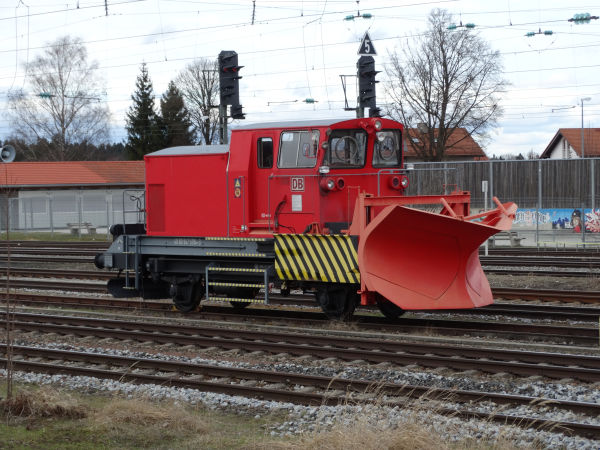
The class 947 rotary snow blower of DB Netze is not exactly a locomotive in itself, but it is usually pushed by a
class Br218 diesel or similar. In this case the machine was not fitted with the rotary blower part as usual, but with a large
snow plough. They can however be easily switched.
Picture from Holzkirchen station 13.3.2018 by Ilkka Siissalo.
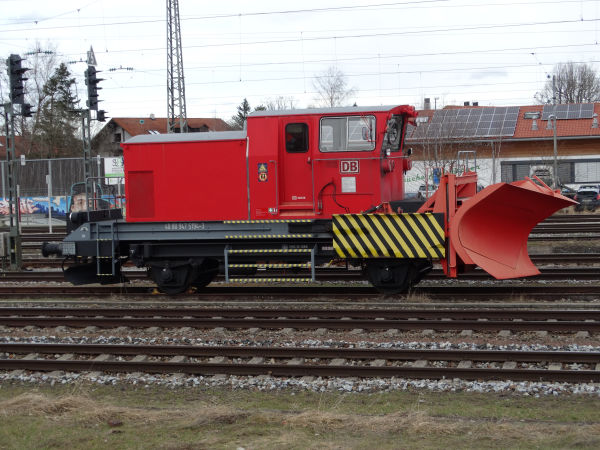
Another view of the same snow machine.
Picture from Holzkirchen station 13.3.2018 by Ilkka Siissalo.
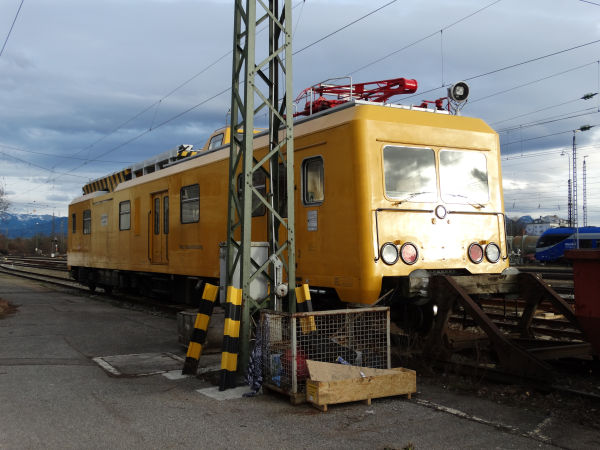
A class Br708 catenary wire inspection and repair wagon.
Picture from Rosenheim station 13.3.2018 by Ilkka Siissalo.
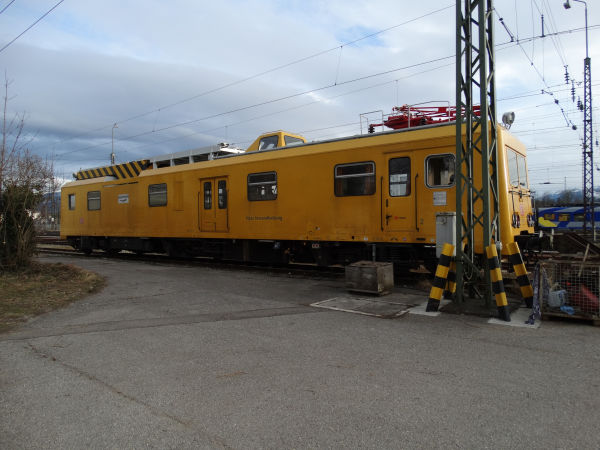
Another view of the same Br708 catenary wire servicing wagon.
Picture from Rosenheim station 13.3.2018 by Ilkka Siissalo.
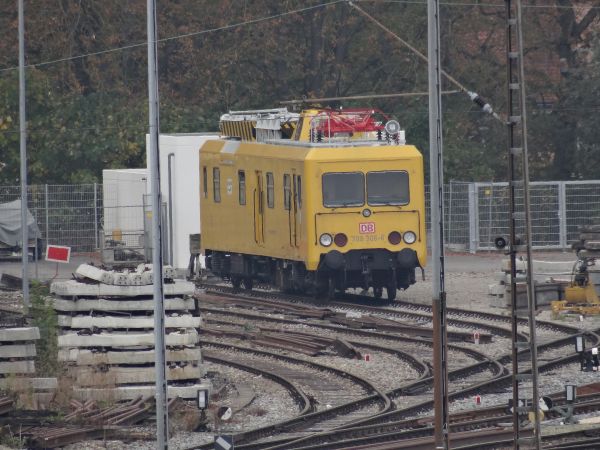
Another Br708 at the Augsburg Hauptbahnhof.
Picture 11.10.2015 by Ilkka Siissalo.
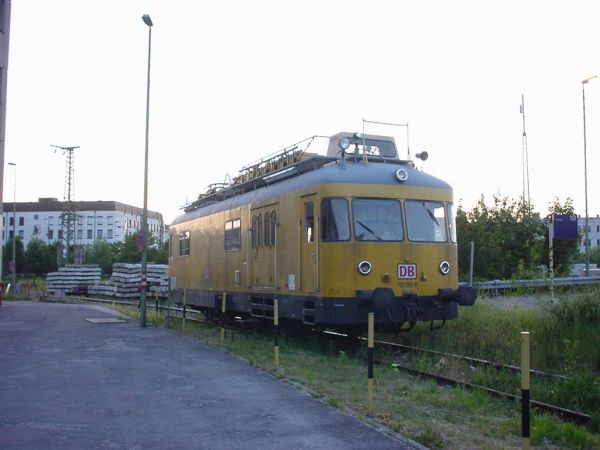
The Br 701 catenary wire installation wagons, "Turmtriebwagen", were older than the Br708. These were built since 1968 and the design
was based on the Br 798 red railbuses.
Picture from München Ostbahnhof 14.6.2002 by Ilkka Siissalo.

In 2026 this old Br 701 Turmtriebwagen looks already badly rusted. These were built 1955-1974 by the Waggon- und Maschinenbau GmbH Donauwörth,
later Messerschmitt-Bölkow-Blohm GmbH MBB.
Picture from Linz am Rhein 18.4.2026 by Ilkka Siissalo.

These Br 726 Gleismesszüge, track measurement wagons, were built by modification from Uerdinger railbuses of the type Br 798.
Picture from Linz am Rhein 18.4.2026 by Ilkka Siissalo.
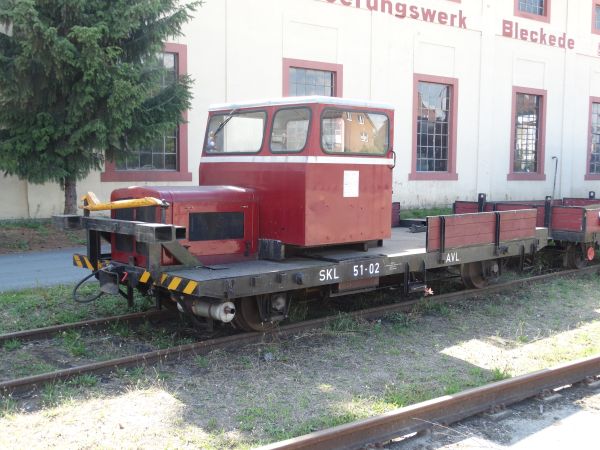
This rail truck SKL 51-02 was already 50 years old at the time as this picture was taken in 2018. It is a so called
Schwerkleinwagen (heavy small wagon) registered to Bleckeder Kleinbahn. Its top speed is 50 km/h and it is allowed to tow
a load of max. 25 tons.
Picture from Bleckede 17.7.2018 by Ilkka Siissalo.
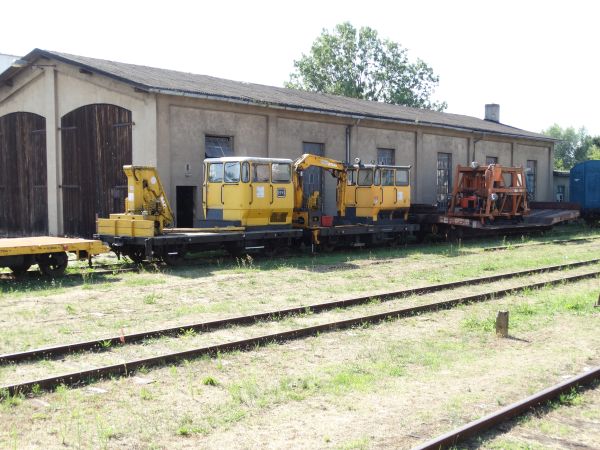
These two old rail trucks also belong to the family of so called
Schwerkleinwagens. The one on the left is a KLV 53, also known as SKL 53, which is probably the most common rail truck type in Germany.
It is registered to the company Rhein-Sieg-Eisenbahn GmbH and it is used by the hobby club EFG, Eisenbahnfreunde Grenzland (friends of
railways of the border country, meaning the former West German - East German border.) Its top speed is 70 km/h and it dates back to 1980.
The one on the right is apparently a KLV 51, a bit older and weaker version.
Picture from Bleckede 17.7.2018 by Ilkka Siissalo.

Another rail truck of the type KLV53.
Picture from DB Museum in Koblenz 19.4.2026 by Ilkka Siissalo.

This one is the KÖF II or later Br 323. It was a military design from the early 1930s and its idea was to be as low and as difficult to
notice as possible. It was used in war instead of steam locomotives as it did not generate any noticeable smoke so that the enemy would
not notice it even very close to the front lines when used during dark nights. It was also important to keep these machines low so that
they could be easly loaded onto regular cargo wagons and transported that way whenever it was necessary to move them for longer distances.
This was a very succesful type and the Germans forced also many factories in conquered countries to build them. For instance in Denmark
the Danes continued to build KÖFs until the 1960s. KÖF stands for Kleinlokomotive, Ölgefeuert, mit Flüssigkeitsbetriebe = Small locomotive,
powered by heating oil and with a hydraulic power transmission. The early KÖFs - like this one - had no door and no side window, just a
fabric curtain. This one has had its curtain replaced with a bit thicker fabric. DB let build over 700 KÖF II machines after the war and
also the communist DDR built a lot of them, calling them Br 100.
Picture from Linz am Rhein 18.4.2026 by Ilkka Siissalo.

This one is a KÖF II built after the war in communist East Germany, there called Br 100.
Picture from Obstfelderschmiede 2.7.2019 by Ilkka Siissalo

In 1959 DB let build 8 different prototype small locomotives called Köf 10 and Köf 11. This Köf 11 which was later called Br 332 became a new standard
type. It was cheap to build and its operator was not required to have full locomotive driver's qualifications. It has a top speed of 45 km/h and a power
rating of 177 kW (240 horsepowers). They were positioned at many smaller and medium sized stations for light shunting duties.
Picture from Linz am Rhein 18.4.2026 by Ilkka Siissalo.